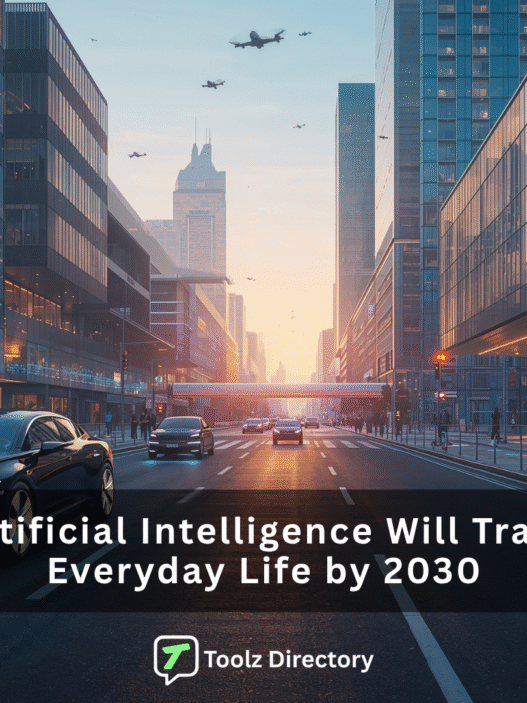









We’re living through a technological revolution that’s reshaping everything from how we work to how we think. Artificial intelligence has evolved from science fiction fantasy to everyday reality, with machine learning algorithms now powering everything from your Netflix recommendations to life-saving medical diagnoses. The pace of innovation in the future tech world has reached breakneck speed, with new breakthroughs emerging almost weekly, a trend we actively track in our AI & Future Tech coverage.
But this is just the beginning. The convergence of AI with other emerging technologies—quantum computing, biotechnology, robotics, and advanced materials—is creating possibilities that seemed impossible just a decade ago. We’re standing at the threshold of an era where machines don’t just process information; they create, adapt, and potentially think in ways that challenge our fundamental understanding of intelligence itself.
The question isn’t whether AI and future technologies will transform our world. They already have. The real question is how quickly these changes will accelerate and what they mean for industries, jobs, and society as a whole. From autonomous vehicles navigating city streets to AI systems composing symphonies and discovering new drugs, we’re witnessing capabilities that were once exclusively human becoming automated.

Understanding these developments isn’t just academic curiosity—it’s essential for anyone who wants to thrive in the coming decades. Whether you’re a business leader planning strategic investments, a student choosing a career path, or simply someone trying to make sense of our rapidly evolving world, grasping the trajectory of AI & Future Tech will help you navigate the opportunities and challenges ahead.
The Current State of AI Applications
Artificial intelligence has quietly woven itself into the fabric of modern life. Machine learning algorithms analyze billions of data points to detect fraudulent transactions, while natural language processing enables real-time translation between dozens of languages. Computer vision systems can now identify objects, faces, and even emotions with accuracy that rivals human perception.
In healthcare, AI systems are revolutionizing diagnosis and treatment. Deep learning models can detect cancer in medical images with 94% accuracy, often spotting tumors that human radiologists might miss. Drug discovery, traditionally a process taking 10-15 years and costing billions, is being compressed through AI-powered molecular design and predictive modeling.
The business world has embraced AI for optimization and automation. Supply chain algorithms predict demand fluctuations and optimize inventory levels, reducing waste by up to 30%. Customer service chatbots handle routine inquiries with increasing sophistication, while recommendation engines drive billions in e-commerce revenue by personalizing shopping experiences.
Financial markets rely heavily on algorithmic trading, with AI systems executing trades in milliseconds based on market patterns humans couldn’t possibly track. These systems now account for over 60% of all trading volume in major markets, making split-second decisions that can move entire sectors.
Even creative industries are experiencing AI integration. Content creation tools generate marketing copy, design logos, and produce video content. Music composition algorithms create original scores, while AI-powered editing tools streamline video production workflows. The technology has evolved from simple automation to creative collaboration.
Key AI Technology Trends to Watch
Several breakthrough technologies are reshaping AI’s capabilities and expanding its potential applications. Large Language Models (LLMs) have demonstrated remarkable abilities in understanding and generating human-like text, leading to conversational AI systems that can engage in complex discussions, write code, and even provide therapy.
Multimodal AI represents another significant leap forward. These systems can process and understand multiple types of data simultaneously—text, images, audio, and video—creating more comprehensive and contextual understanding. This capability enables applications like real-time video analysis with accompanying narration or AI systems that can “see” and “hear” their environment to make more informed decisions.
Edge AI is bringing artificial intelligence closer to where data is generated. Rather than sending information to distant cloud servers for processing, edge devices can run AI algorithms locally. This reduces latency, improves privacy, and enables AI applications in environments with limited connectivity. Smartphones, autonomous vehicles, and IoT devices are increasingly incorporating dedicated AI processing chips.
Neuromorphic computing mimics the structure and function of biological neural networks, potentially offering dramatic improvements in energy efficiency for AI workloads. These chips process information more like human brains, using event-driven computation rather than traditional clock-based processing. Early implementations show promise for applications requiring real-time learning and adaptation.
Quantum-AI hybrid systems are emerging as quantum computing technology matures. While full-scale quantum computers remain limited, hybrid approaches that combine classical and quantum processing are beginning to tackle optimization problems that would be computationally impossible using traditional methods alone.
Federated learning allows AI models to be trained across decentralized datasets without centralizing sensitive information. This approach enables organizations to collaborate on AI development while maintaining data privacy and security—crucial for applications in healthcare, finance, and other regulated industries.
Impact on Industries, Work, and Daily Life
The manufacturing sector is experiencing unprecedented transformation through AI-powered automation and predictive maintenance. Smart factories use machine learning to optimize production schedules, reduce energy consumption, and predict equipment failures before they occur. This has resulted in productivity gains of 20-30% in early adopter facilities.
Transportation is being revolutionized by autonomous systems. Self-driving vehicles are progressing from highway-only operation to complex urban environments. Logistics companies are deploying AI-powered route optimization that reduces delivery times and fuel consumption. Aviation uses AI for flight path optimization, predictive maintenance, and even pilot assistance systems.
The workforce impact extends far beyond simple job displacement. While some roles are becoming automated, AI is also creating entirely new job categories. Data scientists, AI trainers, and human-AI interaction specialists represent emerging professions. Many existing roles are being augmented rather than replaced, with AI handling routine tasks while humans focus on creative problem-solving and relationship management.
Education is being personalized through AI tutoring systems that adapt to individual learning styles and pace. These systems can identify knowledge gaps and provide targeted instruction, potentially addressing educational inequalities by providing high-quality, personalized education at scale.
Healthcare delivery is becoming more precise and accessible. AI-powered diagnostic tools can be deployed in underserved areas, extending specialist expertise to remote locations. Personalized medicine uses genetic data and AI modeling to predict treatment responses, moving beyond one-size-fits-all approaches to truly customized healthcare.
Daily life conveniences continue expanding as smart home systems become more sophisticated. AI assistants now coordinate multiple devices, learn household patterns, and anticipate needs. Personal AI companions help with scheduling, shopping, entertainment recommendations, and even emotional support, pointing towards the future of smartphone technology as a central hub for these services.
Ethical Implications and Challenges
The rapid advancement of AI technologies raises profound ethical questions that society is still grappling with. Algorithmic bias represents one of the most pressing concerns, as AI systems can perpetuate or amplify existing societal biases present in their training data. This has led to documented cases of discriminatory outcomes in hiring, lending, and criminal justice applications.
Privacy erosion occurs as AI systems become increasingly sophisticated at extracting insights from personal data. Facial recognition technology can identify individuals in crowds, while behavioral analysis can predict personal preferences, political leanings, and even mental health states. The challenge lies in balancing the benefits of these capabilities with individual privacy rights.
Accountability and transparency become complex when AI systems make decisions that significantly impact people’s lives. Many advanced AI models operate as “black boxes,” making it difficult to understand how they reach specific conclusions. This lack of interpretability poses challenges for regulatory compliance and public trust.
Job displacement concerns extend beyond simple automation. As AI capabilities expand into cognitive tasks traditionally performed by knowledge workers, entire professional categories may face disruption. The transition period could create significant economic and social challenges if not managed thoughtfully.
Concentration of power among a few large technology companies raises concerns about democratic governance and competition. The massive computational resources required to develop cutting-edge AI systems mean that only a handful of organizations can participate in frontier research, potentially limiting innovation and creating dependencies.
Autonomous weapons development represents perhaps the most serious ethical challenge. The prospect of AI systems making life-and-death decisions without human oversight has prompted calls for international regulation and treaties governing the use of lethal autonomous weapons systems.
Future Scenarios and Predictions: The Future Tech World in 2030
Looking ahead to 2030, several technological convergences will likely reshape society fundamentally, defining the next era of future technology. Artificial General Intelligence (AGI)—AI systems with human-level cognitive abilities across diverse domains—may emerge within this timeframe. While exact timing remains uncertain, the implications would be profound, potentially accelerating scientific discovery and technological development exponentially.
Brain-computer interfaces will mature from experimental medical devices to consumer applications. Direct neural connections could enable thought-controlled computing, enhanced memory and cognitive abilities, and seamless integration between human and artificial intelligence. Early adopters may gain significant competitive advantages in learning and information processing.
Climate technology powered by AI will become critical for addressing environmental challenges. Advanced modeling systems will optimize renewable energy grids, while AI-designed materials could revolutionize solar cells and battery technology. Precision agriculture using AI and robotics might dramatically improve crop yields while reducing environmental impact.
Digital twins—comprehensive virtual models of physical systems—will become ubiquitous. Entire cities, industrial facilities, and even biological systems will have digital counterparts that enable unprecedented simulation, optimization, and predictive capabilities. This technology could revolutionize urban planning, manufacturing, and scientific research.
Space exploration will be accelerated by AI systems capable of autonomous decision-making in environments where Earth-based control is impractical. Mars missions, asteroid mining, and deep space exploration will rely heavily on AI for navigation, resource utilization, and scientific discovery.
The emergence of AI-native companies will challenge traditional business models. Organizations built from the ground up around AI capabilities will likely outcompete legacy institutions in many sectors. This could lead to rapid industry consolidation and the obsolescence of traditional competitive advantages, reshaping the landscape for the future of AI companies.
Quantum computing breakthroughs may occur suddenly, potentially rendering current encryption methods obsolete while simultaneously enabling new forms of AI that are orders of magnitude more powerful than today’s systems. This technological shift could reshape cybersecurity, financial systems, and scientific computing, creating new paradigms for the future tech computer.
Navigating the AI-Driven Future
Preparing for an AI-driven future requires both individual and institutional adaptation strategies. Continuous learning becomes essential as the half-life of specific skills decreases. Focus on developing capabilities that complement AI rather than compete with it—creative problem-solving, emotional intelligence, and complex communication skills will likely remain valuable.
Organizations must develop AI literacy across all levels, not just technical roles. Understanding AI capabilities and limitations enables better decision-making about technology adoption and strategic planning. Companies that successfully integrate AI while maintaining human-centered values will likely achieve sustainable competitive advantages.
Policy frameworks need updating to address AI’s unique challenges while fostering innovation. Regulatory approaches should balance preventing harm with enabling beneficial applications. International cooperation will be essential for addressing global challenges like climate change and ensuring AI development serves humanity’s collective interests.
Investment in education and reskilling programs becomes critical for managing workforce transitions. Society must develop mechanisms for helping displaced workers adapt to new roles while ensuring the benefits of AI-driven productivity gains are broadly shared rather than concentrated among capital owners.
Ethical AI development requires proactive engagement from technologists, policymakers, and civil society. Establishing principles for responsible AI development and deployment can help ensure these powerful technologies serve human flourishing rather than undermining it. Organizations like the Future of Technology and Ethics Institute are doing crucial work in this space, developing frameworks for responsible innovation.
The future shaped by AI and emerging technologies will likely be radically different from today’s world. By understanding these top 10 AI trends and preparing thoughtfully, we can work toward outcomes that harness technology’s immense potential while preserving human agency and values. The choices we make today about AI development and governance will determine whether these technologies become tools for human empowerment or sources of division and disruption.
The transformation has already begun. Our task now is to guide it wisely and understand the profound relationship between artificial intelligence and the future of humans. For more insights on navigating this changing landscape, explore our broader collection of future-focused tools and resources.