








The world is entering a new age of unprecedented technological transformation. Groundbreaking innovations in artificial intelligence, quantum computing, and biotechnology are evolving at an exponential rate. By 2030 and beyond, these future technologies will reshape industries, economies, and our daily lives in ways once confined to science fiction. To stay ahead of the curve, it is crucial for individuals and businesses to understand these emerging top new technologies. For a deeper look into the tools driving this change, you can explore categories like AI and future tech.
In this in-depth article, we will explore the top 10 future technologies that will change the world forever. From the seamless automation of smart cities to revolutionary healthcare breakthroughs, these advancements are set to redefine human existence.
1. Artificial Intelligence and Machine Learning
Artificial Intelligence (AI) is already a powerful force behind automation, predictive analytics, and personalized recommendations. In the coming years, however, AI systems will evolve to become more autonomous, capable of complex cognitive reasoning. These systems will form the backbone of smart cities, advanced healthcare diagnostics, and robust cybersecurity networks. Furthermore, machine learning algorithms will continuously improve by analyzing immense datasets from connected devices.

Businesses are already leveraging AI to streamline operations and enhance customer experience. Consequently, by the next decade, AI will transition from a competitive advantage to an absolute necessity for market survival.
2. Quantum Computing
As a revolutionary leap beyond classical computers, quantum computing uses qubits to process monumental datasets simultaneously. This unique capability makes it ideal for solving problems that are currently intractable for even the most powerful supercomputers.
Industries set to be transformed include:
-
Drug discovery and molecular modeling
-
Advanced climate and weather prediction systems
-
Unbreakable cryptography and national security
-
Complex financial market modeling
While still largely in the R&D phase, progress from companies and research institutions points toward commercial viability within the next decade, making it one of the most anticipated future technologies 2025 will accelerate.
3. Autonomous and Electric Vehicles
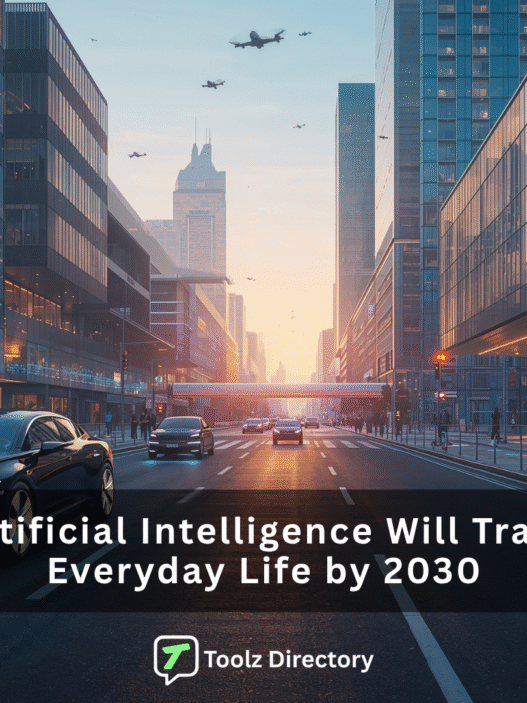
The transportation sector is on the brink of a total overhaul. Consequently, our roads will soon be dominated by self-driving cars, electric vehicles (EVs), and autonomous delivery drones. This shift promises significant benefits, including a dramatic reduction in traffic accidents, lower transportation costs, and cleaner urban environments.
Moreover, cities will begin redesigning their infrastructure around smart traffic flow management, making commuting safer and vastly more efficient.
4. The Internet of Everything (IoE) and Edge Computing
Expanding beyond the Internet of Things (IoT), the Internet of Everything (IoE) connects devices, people, processes, and data into a cohesive, intelligent ecosystem. This is complemented by edge computing, which processes data closer to its source, reducing latency and bandwidth use.
Practical applications include:
-
Smart buildings that self-optimize energy consumption
-
Wearables that provide real-time, 24/7 health monitoring
-
Factories with connected supply chains that predict and adapt to demand instantly
This level of interconnectivity is a cornerstone of the smart cities of tomorrow.
5. Biotechnology and Gene Editing
Future technologies in biotech are poised to radically enhance human health and longevity. Gene-editing tools like CRISPR-Cas9 allow scientists to correct genetic defects, create personalized medicines, and develop more effective cancer treatments.
Key innovations on the horizon are:
-
Lab-grown organs for transplants, eliminating donor waitlists
-
Regenerative therapies to heal damaged tissues and nerves
-
Genetically engineered crops for superior yield and resilience
These advancements could potentially double average life expectancy in many parts of the world over the coming decades.
6. Renewable and Clean Energy Innovations
The global push for sustainability is fueling rapid advancements in clean energy. Solar power, next-generation wind turbines, hydrogen fuel cells, and advanced battery storage systems are becoming more efficient and affordable. As global warming intensifies, the shift away from fossil fuels is accelerating.
By 2050, many nations are expected to operate fully on renewable energy grids. Innovations like wireless power transmission and energy-positive buildings will become standard, fundamentally changing how we power our world.
7. Robotics and Automation
Robots are becoming more intelligent, agile, and integrated into our daily lives. While industrial automation is already widespread, the future will see an explosion in personal, medical, and service robotics.
We can expect advancements such as:
-
Service robots capable of handling complex household chores
-
Fully automated warehouses and logistics centers
-
Robotic exoskeletons that restore mobility
-
Surgical robots performing incredibly precise operations
This robotic age will create new job categories and demand a workforce with new, specialized skills.
8. Augmented Reality (AR) and Virtual Reality (VR)
AR and VR technologies are set to transform not just entertainment, but also education, healthcare, and retail. Instead of interacting with screens, people will engage with immersive digital environments and holographic interfaces.
Future use cases include:
-
Virtual classrooms offering personalized, immersive learning
-
Remote medical procedures guided by AR overlays
-
Digital showrooms where consumers can try products virtually
-
VR-based workplace simulations for training and collaboration
Many experts believe AR glasses will eventually replace smartphones as our primary communication device.
9. Blockchain and Decentralized Technologies
Blockchain technology offers far more than just cryptocurrencies; it provides a framework for transparency, security, and trust in digital transactions. Its decentralized nature makes fraud and unauthorized manipulation extremely difficult.
Its applications are expanding into:
-
Unhackable digital identities and voting systems
-
Transparent and efficient supply chain tracking
-
“Smart contracts” that execute automatically based on predefined rules
-
Modernizing government record-keeping and public services
Decentralized finance (DeFi) is also empowering individuals with greater direct control over their assets.
10. Space Technology and Interplanetary Exploration
Future technologies are propelling us beyond Earth. With reusable rockets, expanding satellite constellations, and ambitious plans for lunar and Martian bases, space is becoming the next frontier for human expansion. For a broader perspective on global tech trends, the World Economic Forum’s emerging technologies report is an excellent resource.
The key possibilities include:
-
Mining rare minerals from asteroids
-
Global high-speed internet via satellite megaconstellations
-
Permanent scientific outposts on the Moon
-
Ensuring the long-term survival of humanity as a multi-planetary species
Why These Future Technologies Matter
The future technologies in the world listed above will not only create entirely new industries but also solve some of humanity’s most pressing challenges. They present unparalleled opportunities for economic growth, sustainable living, and improved global health standards.
Therefore, individuals and organizations that actively learn about and adapt to these changes will secure a significant competitive advantage. For those looking to stay updated with the latest digital tools that leverage these technologies, a great resource is available through online tool directories.
Final Thoughts
The next decade promises to be the most innovative period in human history. From the computational power of quantum computing to the life-saving potential of biotechnology, these future technologies that will change the world present both immense opportunities and complex challenges. While we must navigate issues like ethics and job displacement, the potential for progress is limitless.
Staying informed and proactively developing future-ready skills is the best strategy to not just adapt, but to thrive in the new world that is taking shape. The journey into this exciting future has already begun.